
Crash games are one of the fastest-growing formats in online casinos. They look simple, move fast, and create intense emotional moments – sometimes within seconds. But behind this simplicity lies a very specific game mechanic and a set of psychological triggers that explain why crash games attract millions of players worldwide. This article is an introduction to crash games: what they are, how they work, and why they became so popular in such a short time.


Crash games are one of the fastest-growing formats in online casinos. They look simple, move fast, and create intense emotional moments – sometimes within seconds. But behind this simplicity lies a very specific game mechanic and a set of psychological triggers that explain why crash games attract millions of players worldwide. This article is an introduction to crash games: what they are, how they work, and why they became so popular in such a short time.
What Are Crash Games?
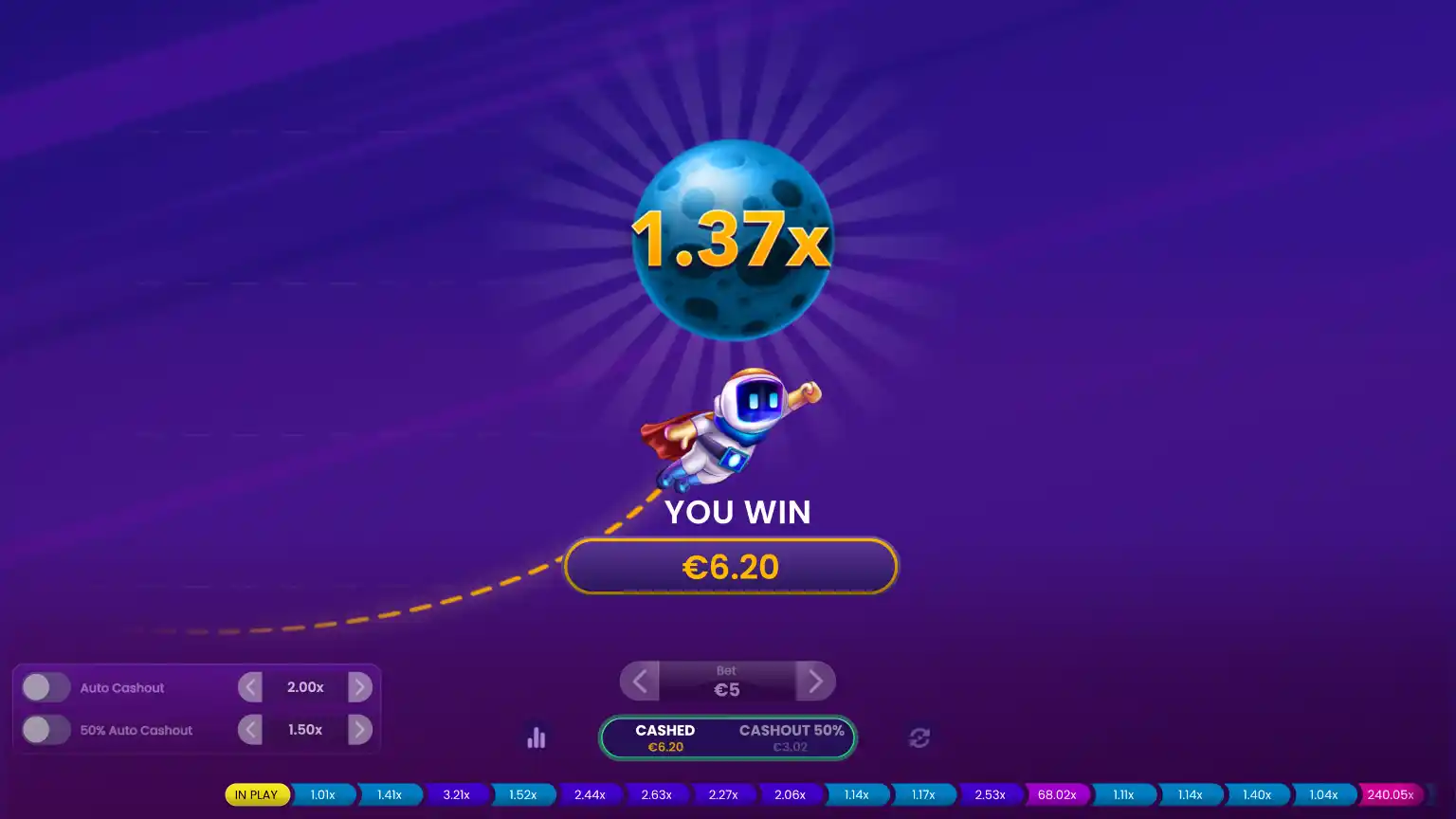
A crash game is a casino game built around a rising multiplier. At the beginning of each round, the multiplier starts at 1.00x and continuously increases. Players can cash out at any moment, locking in their current multiplier – or they can wait longer in hopes of a higher return. At an unpredictable moment, the game crashes. If the crash happens before a player cashes out, the entire stake is lost. There are no reels, no paylines, and no bonus rounds. The entire game revolves around a single decision: when to cash out.

How Do Crash Games Work?
While crash games may look different across platforms, their core mechanics are very similar.
The Rising Multiplier Explained
Each round starts with a new multiplier that grows in real time. The longer the round lasts, the higher the potential payout becomes. This growth creates tension: every second feels like an opportunity – and a risk. From a player’s perspective, the multiplier feels smooth and continuous, even though the outcome of the round is already determined before it starts.
When and Why the Game Crashes
The crash point is generated randomly based on the game’s internal algorithm. Players do not influence it, and there is no guaranteed “safe” moment to cash out. This uncertainty is the defining feature of crash games. Even rounds that seem to be going “too well” can end abruptly at any time.
Why Are Crash Games So Popular?
Crash games combine simplicity with emotional intensity – a rare mix in online gambling.
Simplicity and Instant Feedback
Crash games are easy to understand. There are no complex rules, no learning curve, and no waiting. Each round delivers an immediate result, which keeps players engaged and encourages rapid decision-making.
Psychological Triggers
Crash games activate several powerful psychological effects:
- Fear of missing out (FOMO) when watching the multiplier rise
- Illusion of control by choosing when to cash out
- Near-miss effect when a crash happens just after a player exits
These elements make crash games feel skill-based, even though the outcome is driven by probability.
How Crash Games Differ From Traditional Casino Games
Crash Games vs Slots
Unlike slots, crash games do not rely on reels or symbols. The experience is more transparent and continuous, with a single visible variable – the multiplier.
Crash Games vs Live Casino
Crash games are solitary and fast-paced. There is no dealer interaction, and rounds are much shorter, which increases emotional intensity and repetition.
Are Crash Games Fair?
Crash games are built on randomness and include a mathematical house edge. Over time, the platform always retains a statistical advantage.
Randomness and House Edge
No strategy can remove this edge. While short-term outcomes vary, long-term results always reflect the underlying probabilities.
Common Myths About Crash Games
Many players believe they can identify patterns or “safe zones.” In reality, these perceptions are cognitive biases rather than mathematical truths.
Can You Analyze Crash Games Instead of Guessing?
While no tool can predict outcomes, analysis can help players understand risk.
Why Strategy Testing Matters
Simulations reveal how strategies behave over thousands of rounds – something intuition alone cannot do.
Using Simulations to Understand Risk
Analytical tools, like crash game simulators, do not promise profits. They help visualize volatility, bankroll drawdowns, and long-term expectations.

Final Thoughts on Crash Games
Crash games are neither inherently good nor inherently deceptive. They are a high-risk, high-intensity game format built on simple rules and strong psychological triggers.
Understanding how they work – and what they cannot offer – is the first step toward making informed decisions rather than emotional ones.